
Starting in a few months, I will be making a podcast, based around the blog. It will cover the albums of the week, reviews, and some other stuff. Anywhere from 15 minutes, to an hour. Should be fun. It'll be weekly.
Andy.

From the Balduin Blog:
Antonio Caldara, 1670 or 1671 - December 26, 1736, was an Italian Baroque composer. He is best known as a composer of operas and oratorios.
On “Moog Mass” you can hear vocoder prayers over a moog backtrack. It is one of the first vocoder albums ever made, very rare to find and not available on CD yet.
Enjoy the rarity.


Not much known about this one, but the members went on to found black-metal legends, Darkthrone. Not too mention this is a demo made by "kids".
Kedama - Live at Sunrise Studios (1976 Rare Swiss Prog)
0 comments Published by Abarus on Monday, February 26, 2007 at 4:07 PM
Although the English is a bit difficult to follow on the Black Rills Records web site regarding this release, I take it that the original master tapes of this session were lost, which I assume means it had to be remastered from one of the 200 original LP pressings. If so, they did a really clean job, I can't hear any surface noise on this CD at all. The original recording had obvious problems too, you can clearly hear the microphones being overloaded from the sound pressure levels, plus the "breathing" of limiters coming in and out in odd spots.
But what's important is the music ... and what I can hear here is a blast of previously unknown instrumental progressive innovation and experimentation from the past ... from three Swiss musicians of all things! Personally, I never thought of Switzerland as a hotbed of progressive activity, though the latest releases from Black Rills, who specialize in re-releases of old Swiss progressive bands, are beginning to change my mind about this.
Kedama must have just been kids at the time, a Swiss progressive garage band who couldn't afford studio time to record like the "big boys". Reading between the lines, they found a guy who was just building a studio to record them, but he was on a shoestring budget himself. Hence, "Live at Sunrise Studios", they recorded this live with a stereo pair of microphones direct to stereo tape. No mistakes allowed, no overdubs. As any musician can tell you, this is a gruelling way to record. So you'll have to forgive the odd squeak from chairs and clicks from pedals moving ... considering the recording technique, this performance is awesome.
The band consists of keyboardist Richard Rothenberger who plays heavily distorted Hammond, Mellotron, some sort of electric piano, and a Minimoog which of course had to be programmed on the fly by turning knobs, guitarist Christian Linder who also occasionally plays sitar, and drummer Peter Suder who also plays other percussion including tablas. The sound is slightly reminiscent of ELP, but only because of the distorted Hammond. Musically, it's more like Todd Rundgren's Utopia of the same era, though more avant-garde. There are also some mellow sections where the Mellotron reminds of King Crimson circa Court of the Crimson King. But to be honest, none of these comparisons captures the essence of Kedama's sound very well. They really had a very unique style. The first album sounds very improvised, while the second one sounds a bit more carefully composed, and therefore is a bit more complex, though it still with lots of space for improv. The studio technique is noticably better for the second album too.
But what's important is the music ... and what I can hear here is a blast of previously unknown instrumental progressive innovation and experimentation from the past ... from three Swiss musicians of all things! Personally, I never thought of Switzerland as a hotbed of progressive activity, though the latest releases from Black Rills, who specialize in re-releases of old Swiss progressive bands, are beginning to change my mind about this.
Kedama must have just been kids at the time, a Swiss progressive garage band who couldn't afford studio time to record like the "big boys". Reading between the lines, they found a guy who was just building a studio to record them, but he was on a shoestring budget himself. Hence, "Live at Sunrise Studios", they recorded this live with a stereo pair of microphones direct to stereo tape. No mistakes allowed, no overdubs. As any musician can tell you, this is a gruelling way to record. So you'll have to forgive the odd squeak from chairs and clicks from pedals moving ... considering the recording technique, this performance is awesome.
The band consists of keyboardist Richard Rothenberger who plays heavily distorted Hammond, Mellotron, some sort of electric piano, and a Minimoog which of course had to be programmed on the fly by turning knobs, guitarist Christian Linder who also occasionally plays sitar, and drummer Peter Suder who also plays other percussion including tablas. The sound is slightly reminiscent of ELP, but only because of the distorted Hammond. Musically, it's more like Todd Rundgren's Utopia of the same era, though more avant-garde. There are also some mellow sections where the Mellotron reminds of King Crimson circa Court of the Crimson King. But to be honest, none of these comparisons captures the essence of Kedama's sound very well. They really had a very unique style. The first album sounds very improvised, while the second one sounds a bit more carefully composed, and therefore is a bit more complex, though it still with lots of space for improv. The studio technique is noticably better for the second album too.
Link: http://www.sendspace.com/file/ej6van
Enjoy a prog rarity.
Zippo Zetterlink - In The Poor Sun (1971 Krautrock Private Press)
2 comments Published by Abarus on at 3:48 PM
This was one of the first lost relics of Krautrock to be unearthed. Zippo Zetterlink was the band lead by an obscure character from the late-60's/early-70's Hamburg underground scene, one Wolfgang Orschakowski. At the time of course, no one would release such an album of demented psychedelic cosmic blues! So, in the late-70's Wolfgang released an album himself, documenting some of his remarkable lost music. With live recordings from the Blow Up club in Munich circa 1969, a festival in the Hamburg Melle Park in summer 1971, and some studio jams. Mostly, the side long title track in particular, it's stoned Ash Ra Tempel style jamming, though much more crude and demented. There are a couple of short blues songs too, one interesting, one less-so. It amounts to a unique vision into the Hamburg psychedelic underground, and an unknown Krautrock relic.
Enjoy this cosmic blues jam-out.
Chris Clark - Clarence Park (2001 Electronica Debut)
0 comments Published by Abarus on Sunday, February 25, 2007 at 7:15 PM
 Review:
Being the new kid at the Warp Records School of Mindfuckery wasn't easy for Chris Clark. He ate lunch by himself every day, and the other kids played mean jokes on him. The first day of school, Richard D. James got every other kid at school to wear a mask bearing his likeness, and to utter only the phrase, "I will eat your soul!" Tom Jenkinson hung a picture of a big red car in his locker, and pointed at it menacingly every time Chris walked by. No matter how hard he tried, Chris just couldn't get the other kids at school to like him.
Chris spent the whole school year sad and alone. And then came time for the final project. Word had spread that Tom's project consisted largely of portions stolen from a project he had done several years earlier, and Richard had simply holed himself up in his room, insisting that his enormous masterpiece would be finished "bloody eventually." With the bullies who had made his life miserable in remission, Chris saw the chance he needed to get his peers to respect him. He locked himself up in his room with a Nintendo, some synthesizers, a sampler, and a sequencer. He was going to show them once and for all just what he was capable of.
Several weeks later came the big day: it was time for Chris to present his final project to his classmates. As he walked towards the front of the class, he could hear the cruel giggles of his peers. But he remained unfazed. He calmly walked up to the stylish CD player that stood affixed to a table in the center of the room, placed his freshly burned disc into the tray, and pressed play.
Immediately, the room fell silent. The giggles ceased, and the whole room sat in wide-eyed wonder at the understated beauty of "Pleen 1930s." Subtle piano figures echoed in the digital distance. The very same people who had once taunted Chris now found themselves transfixed by the simple, trance-like beauty of his music.
But just as they were getting comfortable, the furiously manipulated beats and backwards-motorcycle noises of "The Dogs" shattered the communal sense of peace that had developed in the room. The sounds were rich and warm, and alternatingly beautiful and abrasive. "Proper Lofi" took this formula even further, placing percussive synthesizer noise and complex melodies into an unpredictable but strangely intuitive sonic context.
As Chris Clark's CD continued to play, the look of absolute awe on the faces of his classmates seemed only to intensify. But it was not until his finest work, "Lord of the Dance," came on that the true depth of his brilliance became apparent to his classmates. With its "Mega Man" soundtrack-meets-sea shanty melody, filtered synthesizer noise, and frequently interrupted drum machine beat, "Lord of the Dance" was without doubt one of the most fun, catchy songs ever to grace the halls of the school.
As the last seconds of "Nostalgic Oblong" faded, the whole room erupted into a massive cheer. Tears were shed, friendships were made, and Chris Clark went home the most popular kid in school. Tom Jenkinson paid Chris five dollars to sit in front of him during the next test. Chris went to the semi-formal with Mira Calix. With his fluid manipulation of sonic extremes, he'd proven himself more than worthy of the respect of his peers. And if his future endeavors prove to be as successful as Clarence Park, there's a good chance Clark could become the president of his class in the not-so-distant future.
Chris spent the whole school year sad and alone. And then came time for the final project. Word had spread that Tom's project consisted largely of portions stolen from a project he had done several years earlier, and Richard had simply holed himself up in his room, insisting that his enormous masterpiece would be finished "bloody eventually." With the bullies who had made his life miserable in remission, Chris saw the chance he needed to get his peers to respect him. He locked himself up in his room with a Nintendo, some synthesizers, a sampler, and a sequencer. He was going to show them once and for all just what he was capable of.
Several weeks later came the big day: it was time for Chris to present his final project to his classmates. As he walked towards the front of the class, he could hear the cruel giggles of his peers. But he remained unfazed. He calmly walked up to the stylish CD player that stood affixed to a table in the center of the room, placed his freshly burned disc into the tray, and pressed play.
Immediately, the room fell silent. The giggles ceased, and the whole room sat in wide-eyed wonder at the understated beauty of "Pleen 1930s." Subtle piano figures echoed in the digital distance. The very same people who had once taunted Chris now found themselves transfixed by the simple, trance-like beauty of his music.
But just as they were getting comfortable, the furiously manipulated beats and backwards-motorcycle noises of "The Dogs" shattered the communal sense of peace that had developed in the room. The sounds were rich and warm, and alternatingly beautiful and abrasive. "Proper Lofi" took this formula even further, placing percussive synthesizer noise and complex melodies into an unpredictable but strangely intuitive sonic context.
As Chris Clark's CD continued to play, the look of absolute awe on the faces of his classmates seemed only to intensify. But it was not until his finest work, "Lord of the Dance," came on that the true depth of his brilliance became apparent to his classmates. With its "Mega Man" soundtrack-meets-sea shanty melody, filtered synthesizer noise, and frequently interrupted drum machine beat, "Lord of the Dance" was without doubt one of the most fun, catchy songs ever to grace the halls of the school.
As the last seconds of "Nostalgic Oblong" faded, the whole room erupted into a massive cheer. Tears were shed, friendships were made, and Chris Clark went home the most popular kid in school. Tom Jenkinson paid Chris five dollars to sit in front of him during the next test. Chris went to the semi-formal with Mira Calix. With his fluid manipulation of sonic extremes, he'd proven himself more than worthy of the respect of his peers. And if his future endeavors prove to be as successful as Clarence Park, there's a good chance Clark could become the president of his class in the not-so-distant future.
Enjoy this stunning electronic debut


On top of a nearby mound, you spot two ragged indie dudes jamming with just guitar, voice, and drums. You can barely hear 'em (remember the feedback and static), but they come off as total amateurs zapped on Robitussin, bashing out a primal fusion of '60s garage rock and deliriously distorted psychedelia (think early Spacemen 3/Sonic Youth). Of course, the tunes never go very far: Just a minute or two after introducing each song ("I Know Where Madness Goes," "I Am Grass," "Reconnectionland," stuff like that), these two stoners descend into a formless dissonance that drips like electric molasses -- which, believe it or not, jells perfectly with all the environmental sounds surrounding you.
Enjoy this madness of an album. Long live Psychedelia!!!
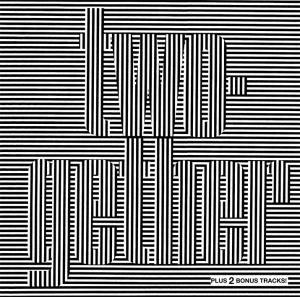 Twogether from Dusseldorf had quite an eventful and vivid past before they released their two only records. At the beginning of the seventies, the best musicians of The Beathovens, Blue Squad and The Crew decided to found BBC for being able to play blues-rock. When in 1973 three of them quit the band, Reinhard Fischer and Klaus Bangert refused to look for substitutes and instead went on in two. Consequently, they named themselves Twogether and played only with drums and keyboards.A classic drum and keyboard combo. Check it out. A rarity in and of itself.

In a recent post on his MySpace page, Warp artist Chris Clark claims "words are nothing but ineffectual in describing a body of music." Not the most encouraging sentiment for a music reviewer, though he's probably right. And when it comes to the dense, wordless electronic opuses that are Clark's specialty, the written word can be an especially awkward translator. But just as Clark is drawn to explaining his ephemeral consciousness through brash beats and intricate melody, the urge to understand and champion such a compelling struggle is strong. While this underrated Aphex Twin disciple produces stunning machinated symphonies that are daunting in their technical proficiency, his music maintains a breathing, spontaneous dexterity. Falling in line with its title, Body Riddle encapsulates the ever-changing human form, part inexplicable being and part steadfast hardware. The continuous fluidity between those two states bolsters this puzzle's severe magnetism.
What sets the album apart from Clark's other detail-oriented click-traps is its jacked-up confidence and stylistic diversity. While his most recent album, 2003's overlooked Empty the Bones of You, was a brilliant, bleak apocalyptic vision, it could easily be broken down into two categories: corrosive manic panic and somber piano elegy. Body Riddle's reach is grander and more assured with Clark now adding full flesh to the bone. The auspicious Brit infuses sonic streaks of contemporaries like Four Tet, Prefuse 73, and DJ Shadow into his repertoire, along with his usual Aphex and Boards of Canada tics. Significantly, these aren't thoughtless dilettante moves. The bright Four Tet-esque scutter of "Night Knuckles", for instance, is actually better than most of that artist's last LP. Similarly, the precision thump of "Ted" blows away anything Scott Herren's done in the last three years, and drum-programming clinic "Herr Bar" sounds like what Shadow should have done with his latest disc. This apprentice-master one-upmanship goes all the way to enigmatic godhead Richard D. James, who never seems to be far away from Clark's name on paper. Whereas James seems to be somewhat lost within his slippery mystique nowadays, Clark continues to mine his ominous perfectionism with increasingly spectacular ends.
Finely hewn and paced, Body Riddle ebbs and flows, following an internal logic that's condensed, myriad, and unpredictable. The album's convulsing dynamics are key to its humanity. Within a single track, drum patterns and tones slide in and out while melodies intermingle and seemingly incongruous noises blend into unannounced cameos only to slip away soon after. Take album-within-a-track spectacle "Matthew Unburdened", which kicks in touting glitch percussion and warbling piano. Then, the beat dismantles suddenly, coming back new and improved, now with strings that sear classical ache into the song's synthetic fabric. The old world instruments take center stage for a melodramatic aside, only to finally give way to a mannered hyper-jazz denouement. That's only one song. Simply, the amount of interlocking minutiae contained within the album's skin-tight 43 minutes is staggering.
The record's journey concludes with a eulogy, "The Autumnal Crush", which features Body Riddle's only line of intelligible language: "And I still miss you." Emanating from this website, the words mean little. But, within the context of this remarkably realized whole, they're completely devastating. The accompanying track fades the LP's linear life cycle with a haunting expansiveness of My Bloody Valentine drowning beneath its own distortions. Few have been able to extract sweeping emotion from such a modern sonic milieu as Clark does here. Fright, sorrow, joy, love, death-- they're all within Body Riddle's corporeal core, waiting to be whittled onto one's individual experience. It's a monumentally personal work that speaks universally; it's a glazed mirror that doesn't lie.
What sets the album apart from Clark's other detail-oriented click-traps is its jacked-up confidence and stylistic diversity. While his most recent album, 2003's overlooked Empty the Bones of You, was a brilliant, bleak apocalyptic vision, it could easily be broken down into two categories: corrosive manic panic and somber piano elegy. Body Riddle's reach is grander and more assured with Clark now adding full flesh to the bone. The auspicious Brit infuses sonic streaks of contemporaries like Four Tet, Prefuse 73, and DJ Shadow into his repertoire, along with his usual Aphex and Boards of Canada tics. Significantly, these aren't thoughtless dilettante moves. The bright Four Tet-esque scutter of "Night Knuckles", for instance, is actually better than most of that artist's last LP. Similarly, the precision thump of "Ted" blows away anything Scott Herren's done in the last three years, and drum-programming clinic "Herr Bar" sounds like what Shadow should have done with his latest disc. This apprentice-master one-upmanship goes all the way to enigmatic godhead Richard D. James, who never seems to be far away from Clark's name on paper. Whereas James seems to be somewhat lost within his slippery mystique nowadays, Clark continues to mine his ominous perfectionism with increasingly spectacular ends.
Finely hewn and paced, Body Riddle ebbs and flows, following an internal logic that's condensed, myriad, and unpredictable. The album's convulsing dynamics are key to its humanity. Within a single track, drum patterns and tones slide in and out while melodies intermingle and seemingly incongruous noises blend into unannounced cameos only to slip away soon after. Take album-within-a-track spectacle "Matthew Unburdened", which kicks in touting glitch percussion and warbling piano. Then, the beat dismantles suddenly, coming back new and improved, now with strings that sear classical ache into the song's synthetic fabric. The old world instruments take center stage for a melodramatic aside, only to finally give way to a mannered hyper-jazz denouement. That's only one song. Simply, the amount of interlocking minutiae contained within the album's skin-tight 43 minutes is staggering.
The record's journey concludes with a eulogy, "The Autumnal Crush", which features Body Riddle's only line of intelligible language: "And I still miss you." Emanating from this website, the words mean little. But, within the context of this remarkably realized whole, they're completely devastating. The accompanying track fades the LP's linear life cycle with a haunting expansiveness of My Bloody Valentine drowning beneath its own distortions. Few have been able to extract sweeping emotion from such a modern sonic milieu as Clark does here. Fright, sorrow, joy, love, death-- they're all within Body Riddle's corporeal core, waiting to be whittled onto one's individual experience. It's a monumentally personal work that speaks universally; it's a glazed mirror that doesn't lie.
Enjoy!

Subscribe to:
Posts (Atom)